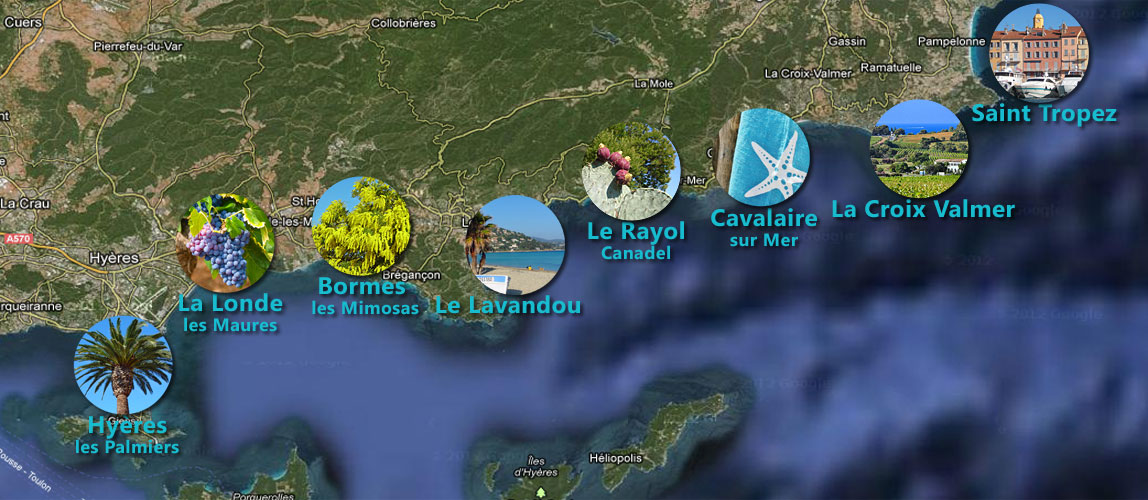
Ernest REYER
Louis Étienne Ernest Rey, also known as Ernest Reyer, was born in Marseille on December 1, 1823 and passed away in Le Lavandou on January 15, 1909.
Ernest REYER
Louis Étienne Ernest Rey, also known as Ernest Reyer, was born in Marseille on December 1, 1823 and passed away in Le Lavandou on January 15, 1909.

Ernest Reyer contributed to the revival of musical taste in France in the last third of the 19th century. It was only in 1848, at the age of 25, that he devoted himself to music and moved to Paris to work under the direction of his aunt, Mrs. Farrenc. His studies on harmony and composition are still incomplete, which is evident in many awkward aspects of the construction of his works. In 1854, he completed Maître Wolfram, in 1858 Sacountala, in 1861 La Statue, in 1862 Érostrate. He then began to compose Sigurd, which was not performed until 1884 in Brussels. His last work was Salammbô (Brussels, 1890; Paris, 1892). He was also a columnist in the artistic press, at the Revue française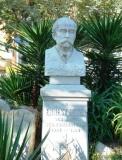 , at the Moniteur universel,at the Gazette musicale or at the Courrier de Paris and became a member of the Académie des beaux-arts in place of Félicien David in 1876. Ernest Reyer is a sincere musician, personal especially in his charm and tenderness; he has a delicate and lively sensitivity, a very poetic imagination. Very French, like Gounod, he was more influenced by the Germans and from this point of view he played a very important historical role, preparing the French public to hear the Wagnerian dramas. He recognized himself, with a touching simplicity, that this would perhaps be his main merit in the eyes of posterity. His two major works, Sigurd and Salammbô, received a triumphal reception in Brussels in 1884 and 1890, before entering the Paris Opera in 1885 and 1892. Salammbô was created with its , at the Moniteur universel,at the Gazette musicale or at the Courrier de Paris and became a member of the Académie des beaux-arts in place of Félicien David in 1876. Ernest Reyer is a sincere musician, personal especially in his charm and tenderness; he has a delicate and lively sensitivity, a very poetic imagination. Very French, like Gounod, he was more influenced by the Germans and from this point of view he played a very important historical role, preparing the French public to hear the Wagnerian dramas. He recognized himself, with a touching simplicity, that this would perhaps be his main merit in the eyes of posterity. His two major works, Sigurd and Salammbô, received a triumphal reception in Brussels in 1884 and 1890, before entering the Paris Opera in 1885 and 1892. Salammbô was created with its  star actress Rose Caron who had already played the role of Brunehild in his Sigurd. He imposed it on the Paris Opera, which subsequently entrusted him with many roles. After Sigurd and with Salammbô, Ernest Reyer had the same success during its premiere in Paris and then in Marseille on 11 April 1893. Ernest Reyer was then making very brief stays in Paris, preferring to live the winter in Lavandou and the summer in Mouthier-Haute-Pierre (Doubs) where he met Césaire Phisalix, who developed the serum against bites of vipers. He also came occasionally to Marseille where he had kept many friends. He died on 15 January 1909 at his home in Le Lavandou. He had retained among his peers a reputation as a great composer, but also as a great man. Théophile Gautier spoke, about him, of "the love of his art pushed to passion and fanaticism, an enthusiasm for the beautiful that nothing discouraged, and the immutable resolution never to make concessions to the bad taste of the public". star actress Rose Caron who had already played the role of Brunehild in his Sigurd. He imposed it on the Paris Opera, which subsequently entrusted him with many roles. After Sigurd and with Salammbô, Ernest Reyer had the same success during its premiere in Paris and then in Marseille on 11 April 1893. Ernest Reyer was then making very brief stays in Paris, preferring to live the winter in Lavandou and the summer in Mouthier-Haute-Pierre (Doubs) where he met Césaire Phisalix, who developed the serum against bites of vipers. He also came occasionally to Marseille where he had kept many friends. He died on 15 January 1909 at his home in Le Lavandou. He had retained among his peers a reputation as a great composer, but also as a great man. Théophile Gautier spoke, about him, of "the love of his art pushed to passion and fanaticism, an enthusiasm for the beautiful that nothing discouraged, and the immutable resolution never to make concessions to the bad taste of the public".
 |
musical compositions
-
Chœur des buveurs et chœurs des assiégés, v. 1848.
-
Le Sélam, 1850.
-
Maître Wolfram, 1854.
-
Sakountala, 1858.
-
Chant des paysans , 1861.
-
La Statue, 1860.
-
Erostrate, 1862.
-
L'Hymne du Rhin, paroles de Méry, 1865.
-
La Madeleine au désert, poésie d'Ed. Blau, 1874.
-
Marche tzigane.
-
Recueil de mélodies et de fragments d'opéras.
-
Sigurd, 1884.
-
Salammbô, 1890.
-
Tristesse, poésie d'Ed. Blau, 1884.
-
L'Homme, poésie de G. Boyer, 1892.
-
Trois sonnets, poésies de C. du Locle.
|
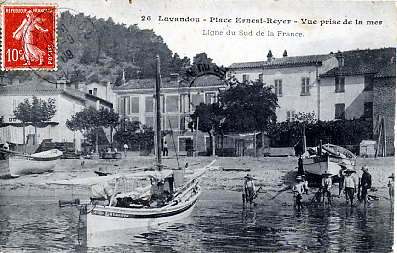
1909. Place Reyer Lavandou |
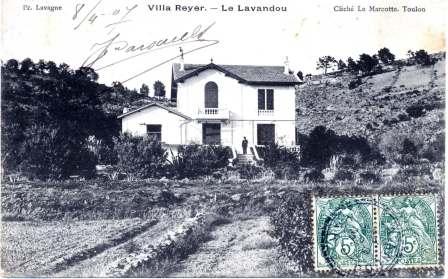 |
| 1907. Reyer Villa destroyed in 1996 |
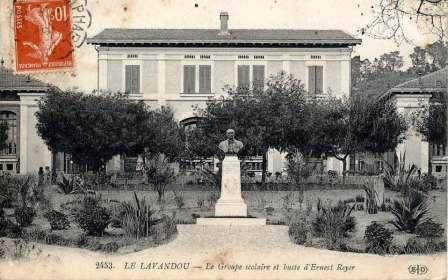 |
| 1914. School groups Ernest Reyer |
Berlioz was a loyal friend of Reyer |
|
Retrospective of major events and exhibitions
|
|
|
|
|