The Mediterranean vegetation has been shaped over thousands of years by human activities such as agriculture or pastoralism. The coastal flora escapes much more than the flora of inland soil type (siliceous or calcareous) as an ecological factor determines the distribution of sea plants: the presence of salt.
• Cork Tree (Quercus suber)
The natural forests, the cork oak forests that it forms are not dense and are invaded by maquis. It requires heavy rainfall and prefers a siliceous soil. It is widespread in the eastern Var. It is recognizable by its thick layer of cork which earned it its first skin around the age of 20; then every 13-14 years, it will produce a usable cork; between the two, it will have time to redo a layer of cork thick about 5 cm. The Var, thanks to the Maures massif, was at the beginning of the century a major production centre for cork and agglomerated by-products. This tree loves deep siliceous soils..
• Maritime pine (Pinus pinaster)
It replaces the Aleppo pine on siliceous soils. It can form mixed forests with holm oak. Its needles are long and thick, its cones are large and its trunk black. Unfortunately they often languish, attacked by a scale insect; more than 120,000 hectares have been destroyed in the Var and the Alpes-Maritimes in about thirty years. The cork oak, then advantaged, robs him of the place..
• Myrtle (Myrtus communis)
It is a shrub that has persistent and aromatic foliage. It was for the Greeks, in antiquity, the symbol of love and glory. Its oval and pointed leaves are shiny;
The main vein is very pronounced. Its numerous white flowers produce small bluish black berries. Its essential oil is used against bronchial conditions. It is part of the mastic group and prefers to avoid limestone..
• Mimosa florists (Acacia dealbata)
This fast growing tree originates from Australia. It is sensitive to the cold. Naturalized in the Maures and Estérel, it tends to invade the natural environment. It flowers in winter; its fragrance is pronounced.
• Tree Bruyère (Erica arborea)
It is often associated with the arbutus tree on soils poor in limestone; its bark is reddish; its leaves have a groove on their lower face; its stems are hairy. When it develops, it causes the soil to evolve towards the 'heather earth' type, an acidic soil that is not conducive to the growth of noble trees.
• Lavender of Maures (Lavandula stoechas)
Less fragrant than other lavenders, it grows on siliceous soils often in the undergrowth of pine trees. She recognizes herself by her purple toupee at the top of her flower ear. She is from the same family as thyme or rosemary.
• Arbutus (Arbustus unedo)
Its bark is characteristic: it has fine crevices. It is one of the rare shrubs whose flowers (white bells) and fruits can be observed at the same time. Its edible fruits, the arbouses, blush in the autumn sun. He does not like calcareous grounds, but likes the company of cork oak.
| Land siliceous or calcareous |
Plants are often sculpted by the wind; they often take prostrate forms, sometimes even forming natural bonsai. Branches that are too exposed to the winds dry out: it’s anemomorphosis.
• Aleppo pine (Pinus halepensis)
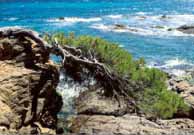 It is the most widespread and important conifer of the hot, dry rocky coasts. Sometimes we find it tortured by the winds, clinging to a cliff side, and it’s hard to imagine where it gets its livelihood from. He is not demanding about the nature of the soils, but prefers the presence of limestone. It can take a flag port due to anemomorphosis or it lies at ground level to have fewer outlets in the wind. In the shelter, among its peers, it will be straight and slender, can reach 20 m high. The germination of its seeds is favored by the passage of fire. Its undergrowth is formed by low maquis. In the past, it was planted for the extraction of its resin. This practice has become rare.. It is the most widespread and important conifer of the hot, dry rocky coasts. Sometimes we find it tortured by the winds, clinging to a cliff side, and it’s hard to imagine where it gets its livelihood from. He is not demanding about the nature of the soils, but prefers the presence of limestone. It can take a flag port due to anemomorphosis or it lies at ground level to have fewer outlets in the wind. In the shelter, among its peers, it will be straight and slender, can reach 20 m high. The germination of its seeds is favored by the passage of fire. Its undergrowth is formed by low maquis. In the past, it was planted for the extraction of its resin. This practice has become rare..
• Cypress (Cupressus sempervirens)
It can grow spontaneously on cracked limestone or rocky cliffs. It is easily recognizable by its magnificent appearance.
• Passerine (Thymelaea hirsuta)
It is a bushy plant. Its very small, thick, hairy leaves are imbricated on the stem. It only likes the hottest places. It is a protected species
• Green Oak or Yeuse (Quercus ilex)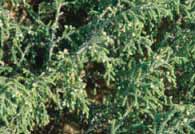
This tree can reach more than 20 meters. It is from it that the term garrigue comes. Its distribution corresponds well to the Mediterranean area. Its leaves have very variable shapes depending on their location on the tree: they are dark green and shiny above and gray and hairy below; this allows to reduce their evaporation. This tree prefers limestone substrates, but does not desert siliceous ones. Green oak forests are not conducive to fire and soil erosion. Its very hard wood is used for making tools and has long been exploited as firewood.
• Alfalfa tree (Medicago arborea)
It is native to Turkey and presents itself in the form of a shrub. It is spontaneous only on the coast. It has leaves with three lobes, flowers of a sustained yellow, which will give spiral pods (1 round), quite broad.
• Laurustinus or la Viorne-tin (Viburnum tinus)
This evergreen shrub is noticed, during its flowering, by its large white floral heads that will give small metallic blue berries. Its evergreen leaves are hairy on their underside.
• Lentisque (Pistacia lentiscus)
It is one of the most characteristic shrubs of our region. Its evergreen leaves are green and dark. It has a resin smell. Its white flowers are in clusters and will give small red then black fruits. Its resin gives a gum: the gum of Kios, which is used in dental care and for the manufacture of chewing gum. It is often found associated with wild olive trees and holm oaks.
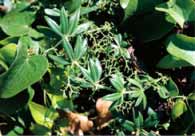 • La Garance voyageuse (Rubia peregrina) • La Garance voyageuse (Rubia peregrina)
It is often associated with holm oak. This vine gets its name from the fact that it has very small hooks that allow it to cling to the first traveler who passes. Its leaves are grouped by 4 on its square-section stem. Its pale yellow flowers will give small berries. It was once cultivated to produce a red dye from its roots. It is well known to painters.
• Le Fragon ou Petit houx (Ruscus aculeatus)
It is a green woody plant in a tuft. Its prickly and flattened false leaves carry flowers and fruits.
• The bindweed Provence
(Convolvulus althacoïdes)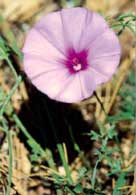
He likes to tan his pink corollas near the sea. His stem is lying or climbing. Its upper leaves are deeply divided; the lower ones are heart-shaped.
• Orobanche (Orobanche rapum-genistae)
This parasitic plant, without chlorophyll, resembles a red orchid stem. It bears many brown scales. Its flowers can be yellow or pink. It lives thanks to the plant it parasitizes.
• Pittospore (Pittosporum tobira)
It is of Chinese origin. Very rustic with its coriaceous green and dark leaves, it is capable of reseeding. Its white to beige flowers are very fragrant. It is often found planted in green spaces or in our gardens.
• Salsepareille (Smilax aspersa)
This plant was made famous thanks to the Smurfs: these little blue men make a soup out of it! This spiny vine has heart-shaped leaves, more or less triangular. It also clings to the bushes through tendrils.
• Armoise arborescente
(Artemisia arborescens)
It is only found on the maritime rocks of the Var. It has surely been naturalized. It forms tufts in pads. It is fragrant, woody. Its whitish leaves, divided into segments, can make one believe, at first glance, that it stings.
• Olivier (Olea europaea)
This tree, cultivated since ancient times, is the symbol of peace and immortality because it has a slow growth. Its leaves are green on top and silver underneath. Its original wild form, the oleaster, which is part of the littoral bush and generally remains shrub-sized, is quite rare. It is known to have been present in Provence for at least 10,000 years. Its oil has always been one of the riches of the Mediterranean lands. It is for her that it has been cultivated since the Greeks. At the beginning of the 19th century, oil mills multiplied. The olive tree was rarely cultivated alone, but rather in association with vines and fruit trees. The phylloxera disease and mechanization pushed him back to low-fertility benches, in favor of the vine. For 20 years, the interest of the French in olive oil has grown, especially for its medical virtues; that is why olive growing is regaining its nobility in our region.
• Aphyllante de Montpellier (Aphyllantes monspeliensis)
It grows in tufts often devoid of leaves. Blue, its flowers color the rosemary scrubland in spring and early summer. She is often in the scrubland, accompanying pubescent oaks.
• Umbrella pine or Pin pignon (Pinus pinea)
The tree is quite closely linked to sandy coastal soils; it enters little inland. Its port, which characterizes it, allows it to provide generous shade from the top of its 30 meters. Its undergrowth is a low maquis. Pine nuts are included in Provençal recipes for pastry or confectionery.
• Buis (Buxus sempervirens)
Small shrub (1 to 3 m.), with small evergreen leaves, oval, dark green, glossy and opposite. Its yellowish flowers are at the axil of the leaves. It is more often found on limestone soils where it replaces degraded hairy oak trees. Its wood is very hard; we make piglets from it (you know 'le petit' at pétanque!), but also rosaries. For several millennia, it has been found to have medicinal and ornamental properties.
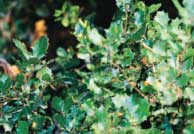 • Le Lotier (Lotus sp.) • Le Lotier (Lotus sp.)
The trefoil is a herbaceous plant that is part of the legume family. There are several species generally with yellow flowers, which will give fruits resembling small beans.
• Chêne kermès (Quercus coccifera)
This shrub, the smallest of the oaks, will be found in the case of a degradation of the green oak or in the undergrowth of a pine forest. It can form very dense and impenetrable thickets because of its small, coriaceous, spiny leaves. Its name comes from the gall caused by a cochineal; this harvested was used to make a dye. It is rarely found on silica soils. It releases the stump after a fire.
These plants tolerate the presence of salt or need it to grow.
• Glasswort (Arthrocnemum sp.)
This compact shrub is characteristic of sansouires. It therefore grows on salty ground. Saltwort can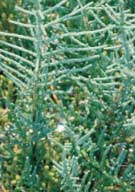 be enjoyed in a salad or prepared like green beans. be enjoyed in a salad or prepared like green beans.
• Arroche halime (Atriplex halimus)
This shrub is often planted as a hedge by the sea because it resists salt. Its white and silver leaves are quite thick and alternate along the stem. It makes clusters of yellow flowers in late summer and can reach 2 meters high.
• Obione (Halimione portucaloides)
It constitutes dense silvery massifs, often lying on the ground, which have tufts in the shape of cushions. It resembles the arroche halime with narrower and fuller leaves.
• Jonc aigü (Juncus acutus)
On the coastline, it often delimits the passage from salt to fresh water. It forms a tuft of needle-shaped leaves that can reach more than one meter in height.
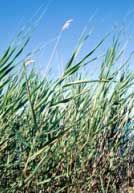 • Reed (Phragmites australis) • Reed (Phragmites australis)
It forms reedbeds at the edge of the coastal marshes. It often supports nesting birds. It was once used for roofing. It does not necessarily have its feet in the water. It looks a lot like the cane of Provence, but its stem is finer.
• Canne de Provence (Arundo donax)
The largest of our grasses (up to 5 m.) has large woody stems. It is used to make reeds for musical instruments, but also reed barrels and tutors. It loves humidity and can be used as a windproof hedge.
• Oleander (Nerium oleander)
This shrub with a straight stem and long, persistent leaves is often planted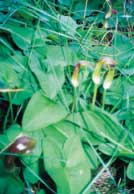 in our gardens, but it is spontaneous at the edge of small temporary streams: the wadis. Its superb flowers are white, pink or red. It is a very toxic plant: soldiers of Napoleon had not been able to fight, poisoned, after having prepared their meal with stems of Oleander. These wild plants are protected. It should not be confused with bay leaf sauce, whose leaves are used in Provençal cuisine. Protected wild species. in our gardens, but it is spontaneous at the edge of small temporary streams: the wadis. Its superb flowers are white, pink or red. It is a very toxic plant: soldiers of Napoleon had not been able to fight, poisoned, after having prepared their meal with stems of Oleander. These wild plants are protected. It should not be confused with bay leaf sauce, whose leaves are used in Provençal cuisine. Protected wild species.
• Arum à capuchon ou l'Arum arisarum (Arisarum vulgare)
It is a small perennial plant, easy to recognize during its flowering. Its flower has a cap shape.
• Fig Tree (Ficus carica)
He is a pioneer. His dissemination is done thanks to the birds. This tree needs a small insect (the blastophagus) to reproduce and vice versa. The insect fertilizes the flowers inside the fig and lays its eggs there; the larvae will develop there.
• Acanthe (Acanthus mollis)
This perennial plant likes to grow in coppice, sparse forests, cool places. It has very large and beautiful leaves that are the origin of the inspiration for the Corinthian style |
|