The word "Lavandou" first makes you think of "Lavender".
This is not surprising since the names lavender and Lavandou are very close.
A variety of lavender (lavandula stoechas) does in fact grow on the Maures hills but the Provençal name for it is Queirélé.
And we shouldn't forget that barely sixty years ago, Provençal was the only, 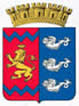 or almost the only, language spoken in our village. How on earth could we have got lavandou from queirélé ?!
What seems most certain is written in Le Félibrige by Frédéric Mistral, the great Provençal poet and Nobel prize winner.
On page 195 of the 2nd volume :
Lavadou - LAVANDOU (Var) synonym of the word " lavoir " (washhouse).
In support of this theory is a painting by Charles Ginoux belonging to Le Lavandou town hall depicting the hamlet of Le Lavandou in 1736 with in the foreground the washhouse where the wives of the fishermen washed their linen.
1913: Le Lavandou became a commune
In the beginning, Lavandou was one of the districts of Bormes-les-Mimosas commune, but in 1909 the time had come to  claim independence as a separate commune. At the end of a long process, the Government separated from Bormes commune all the land between Gouron headland in the west and Pramousquier's Fontalde gully in the east and north of the river Môle, approximately 1160 acres.
The Council of State adopted the bill and Le Lavandou became a commune. The law was voted in on 27th March by the Chambre des Députés (House of Commons), passed by the Senate on 20th May and promulgated by President Raymond Poincaré on 25th May, 1913 ; thus Le Lavandou became a commune in its own right, independent from Bormes-les-Mimosas. In 2013 was Le Lavandou centennial commemoration.
claim independence as a separate commune. At the end of a long process, the Government separated from Bormes commune all the land between Gouron headland in the west and Pramousquier's Fontalde gully in the east and north of the river Môle, approximately 1160 acres.
The Council of State adopted the bill and Le Lavandou became a commune. The law was voted in on 27th March by the Chambre des Députés (House of Commons), passed by the Senate on 20th May and promulgated by President Raymond Poincaré on 25th May, 1913 ; thus Le Lavandou became a commune in its own right, independent from Bormes-les-Mimosas. In 2013 was Le Lavandou centennial commemoration.