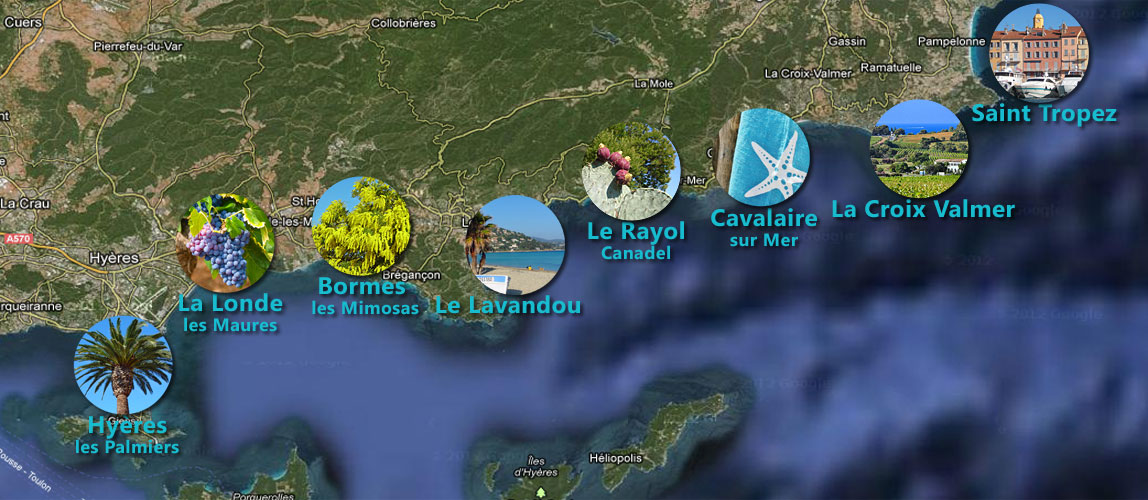
On the route of the Roman Empire three resorts are mentioned between the ports of Fréjus and Pomponiana (Giens roadstead) going from east to west : Sinus Sambracitanus (Saint Tropez), Heraclea Caccabaria (Cavalaire) and Alconis (Bormes roadstead).
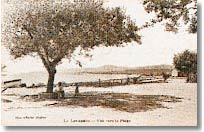 It is believed that the Greeks set up the resort of Alconis, a luxurious place of residence and the Latin's favourite spot on the Var coast, not far from The Lavandou, in Cavalière Bay. It is believed that the Greeks set up the resort of Alconis, a luxurious place of residence and the Latin's favourite spot on the Var coast, not far from The Lavandou, in Cavalière Bay.
1376, the future Lady Katrina of Sienna, was accompanying Pope Gregory XI from Avignon to Rome, when a bad 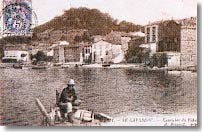 storm forced the ship to put into port in Sanary bay. The Holy Father refused to land and pushed on regardless of the danger.
Katerina continued on her way by land and came to Toulon where she performed a miracle. In gratitude, the population escorted her to the city gates and she embarked for Le Lavandou where the Pope's galley had been forced to anchor. This is one of the versions of the Pope's voyage. storm forced the ship to put into port in Sanary bay. The Holy Father refused to land and pushed on regardless of the danger.
Katerina continued on her way by land and came to Toulon where she performed a miracle. In gratitude, the population escorted her to the city gates and she embarked for Le Lavandou where the Pope's galley had been forced to anchor. This is one of the versions of the Pope's voyage.
1481 the King Louis XI was seriously ill in his castle in Plessis les Tours. As Coittier, his doctor had exhausted all the scientific remedies, the king sent one of his fathful followers Guinot de Bussières to fetch the hermit Francis of Paul from Calabria, famous for his miracles.
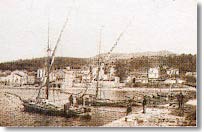 The Saint, giving in to the Pope and the King of Naples' entreaties and beseeched by Louis XI, left Paterna on a royal galley departing from Ostia but unable to land in Marseilles because of the plague, turned back and landed in The Lavandou in 1482 with two monks and the King of France's messengers.
As he climbed off the boat, the Saint set foot on a rock just above the surface of the water where you can still see the prints of his feet and the mark left by his traveling stick. Before continuing on his journey, the Saint headed for Bormes which he delivered from the plague. The Saint, giving in to the Pope and the King of Naples' entreaties and beseeched by Louis XI, left Paterna on a royal galley departing from Ostia but unable to land in Marseilles because of the plague, turned back and landed in The Lavandou in 1482 with two monks and the King of France's messengers.
As he climbed off the boat, the Saint set foot on a rock just above the surface of the water where you can still see the prints of his feet and the mark left by his traveling stick. Before continuing on his journey, the Saint headed for Bormes which he delivered from the plague.
 1524 Constable de Bourbon's troops headed for Toulon laid siege in front of Bormes and Brégançon castles and devasted all the country around The Lavandou. In 1529, as in 730 and 1393, Moor pirates pillaged the region and burnt Bormes. 1524 Constable de Bourbon's troops headed for Toulon laid siege in front of Bormes and Brégançon castles and devasted all the country around The Lavandou. In 1529, as in 730 and 1393, Moor pirates pillaged the region and burnt Bormes.
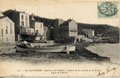
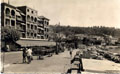
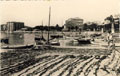
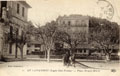
1674 Le Lavandou is mentioned in the departmental archives of Draguignan. The parish registers give the following information on the population growth :
1680 : 146 inhabitants. 1906 : 776 inhabitants. 2006 : 5600 inhabitants.
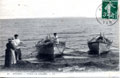
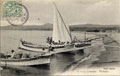
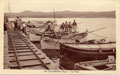
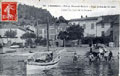
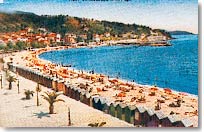 The tiny hamlet lived mainly off fishing and 150 " pescadous " of Catalan and Genoese extract were active fishermen. The tiny hamlet lived mainly off fishing and 150 " pescadous " of Catalan and Genoese extract were active fishermen.
Ten years later, Charles Quint's flotilla, under the orders of the Genoese Admiral André Doria destroyed the little that had been left by the Berbers.
1706 a powerful English-Dutch squadron, comprised of 66 vessels and 34 transport ships, under the orders of Amiral Showel anchored between the islet of Bagaud and Cap Bénat.
A period of relative calm followed up until the Revolution. Le Lavandou and its surroundings were not spared by the upheaval of the Revolution.
1794 a certain Napoleon Bonaparte, the not very well-known general in charge of the artillery, came and inspected the batteries of The Lavandou and Brégançon.
 Making a big leap in time we come to the latest page in The Lavandou history when in 1942 General Giraud, led by 100 ans du Lavandoua local fisherman, set off secretly from Saint Clair on board an English sub-marine to go and take command of French troops in North Africa. On the night of August 15th 1944 the North-African commando units landed on Cavalière beach and the rocks of Cap Nègre… Making a big leap in time we come to the latest page in The Lavandou history when in 1942 General Giraud, led by 100 ans du Lavandoua local fisherman, set off secretly from Saint Clair on board an English sub-marine to go and take command of French troops in North Africa. On the night of August 15th 1944 the North-African commando units landed on Cavalière beach and the rocks of Cap Nègre…
|